

Pamilacan Island: Dive Sites - Spanish Tower & Santuary
Diving Pamilacan Island Bohol (2026): Postcard Perfect
Pamilacan Island is postcard perfect and one of Bohol’s most authentic and rewarding diving destinations. With its mix of diving conditions, from challenging currents and big fish action to diverse coral reefs and walls, it is a dive trip worth making.
The island is part of the Bohol Marine Triangle (BMT), a recognised conservation zone that also includes Panglao and Balicasag Island. Situated in the Bohol Sea, about 18 kilometres northeast of Panglao, Pamilacan belongs to the municipality of Baclayon and is home to around 1,400 residents who primarily rely on fishing and tourism.
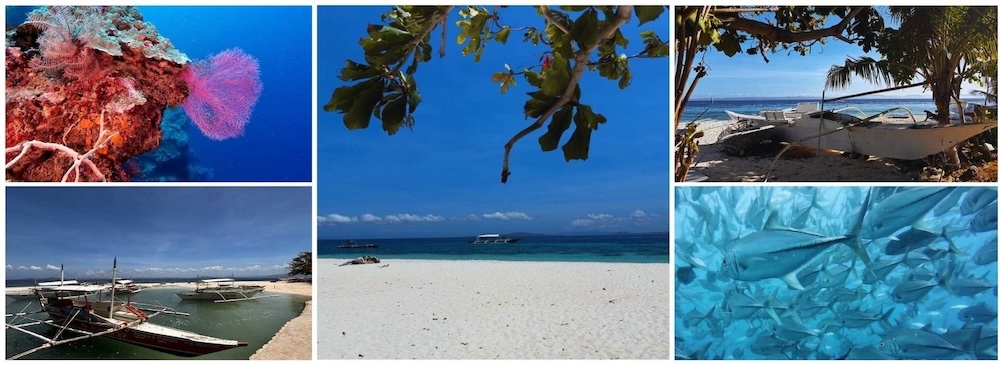
Location Spanish Tower: The beautiful beach at the tower is a great place to spend some time snorkeling or just taking in the outstanding scenery. Dive images taken at Dakit-Dakit and Sanctuary.
Made up of three main dive sites, Dakit-Dakit, Spanish Tower, and Sanctuary, each site offers something different. Spanish Tower and Sanctuary, on the sheltered side of the island, provide coral gardens and walls. In contrast, and unusual for the region, Dakit-Dakit has a long sandy slope, exposed sea conditions, and strong currents, making it a challenging long-drift dive.
This guide provides area locations, dive site maps, and real-time videos of the dive sites. We cover the highlights, options for reaching Pamilacan Island, weather considerations, and where to look if you need a resort.

Table of Contents
Click a topic below to jump directly to that section of the guide.
1.Dive Map

Highlighted Guides & Articles
A selection of dive guides and articles covering dive travel, Central Visayas dive sites, and underwater photography and videography. Each one offers clear, practical insight built from real diving across the Central Philippines.






Dive Map - Pamilacan Island
Featuring Panglao’s main arrival points, top accommodation areas, and the key dive sites around Pamilacan Island.
Pamilacan island: Dive Site Map - Click the map pins for location snippets
Map Source: John Hawkins | Leaflet | 2026

Our Videos - Dive Pamilacan
Real Time Real Diving: The Island offers a great mix of conditions for divers of all levels.
Great wall diving south of the Spanish Tower
This side of the island is known for its challenging diving conditions.
See authentic dives from sites across the central Visayas on YouTube.
Pamilacan Island: Dakit Dakit dive site – Off the east side of the ilsand and known for it big schools of jackfish, it can be a challenging dive due to exposed sea conditions and strong currents.
Highlights & Final Thoughts – Pamilacan Island
Living in the region, I’m lucky to dive at the island throughout the year and in all conditions. It really is a great day out—from the boat ride and the beautiful island scenery to the mix of coral reef, wall, and sandy slopes, all covered across just three dive sites. On the right day, it can be spectacular. My favorite dive site here is Dakit Dakit; it offers something different, with its scattered coral outcrops, big fish sightings, and challenging currents.
The Pamilacan Island dive trip—along with Balicasag—is a staple offering from dive operators based in Panglao. Most shops provide a three-dive trip: two dives at the island, followed by a third at one of the local Panglao sites, such as the Danao Wall. If you're coming to Panglao as part of a multi-site dive trip, or using it as your base, Pamilacan stands out as one of the must-dive highlights in the region.

Reaching Pamilacan Island: Routes & Options
Bohol Region Diving Hub – Panglao
Unless you're a local diver, your starting point for diving at Pamilacan Island will likely be Panglao. Panglao serves as the diving hub for the region and is home to most of the dive operations covering the reefs of the Bohol Marine Triangle.

Providing fast efficient connection for divers exploring the Central Visayas
Panglao is one of the most accessible dive locations in the Philippines. For international travelers, the most convenient route is to fly into Manila and then take a domestic flight directly to Bohol–Panglao International Airport. If you're arriving in Cebu, you’ll need to catch the OceanJet ferry to Tagbilaran, followed by a short tuk-tuk or van ride to Panglao.
While Bohol–Panglao International Airport doesn’t handle major long-haul routes, it does receive direct international flights from South Korea, Taiwan, China, and Hong Kong—making it a viable entry point for regional travelers looking to dive the Central Visayas.

Where to Stay: Panglao
The Panglao area really does offers a wide range of accommodation options, from dedicated dive resorts with in-house gear and guides to more traditional hotels and guesthouses. Whether you're traveling on a budget or looking for comfort, there are choices to match every price point.
When choosing accommodation in Panglao, consider how close it is to your dive operator. If you're planning to dive daily or take a course, staying far from the shop can quickly become inconvenient. With a bit of planning, you can book a place nearby or stay at a dedicated dive resort to make things easier.

Alona Beach: A lively stretch with beachfront hotels, easy access to dive shops, and vibrant nightlife.
Recommendations & Advice
Alona Beach is the go-to destination for most visitors to Panglao. It offers a good mix of hotels, dive shops, and a lively nightlife scene.
If you're planning to dive from here or take a dive course, it's worth doing a bit of research before booking. There are plenty of operators, but not all offer the same standards—some focus more on the regional market, while others are geared toward international divers.
Walk along the beach, visit the shops, and don’t hesitate to ask the right questions before committing.

Donao Beach: Is the main mooring point for the Panglao bangka fleet and one of the main pick-up point for divers heading out to the reefs.
Danao Beach is located about 2 km south of Alona. While it doesn’t have the same beachfront charm, it’s home to a growing number of well-regarded resorts and dive operators.
My first choice for diving in this area is Haka Dive Center. They offer resort accommodation, PADI training, and are well-supported by tenders, two large bangkas, and a team of first-class instructors and dive guides.
July - November: Low Season Advice
Visitor numbers tend to drop between early July and late September. This coincides with the transition from the Amihan to the Habagat monsoon season. The southwest Habagat brings hot, humid conditions, heavier rainfall, and is responsible for most typhoon activity in the Philippines.

Dive Weather - Understand the Seasons, the Science and the Impact of Tropical Cyclones
While the central Philippines are relatively sheltered from the direct effects of the southwest monsoon and Pacific typhoons, there is still local impact. If you're planning to dive during this period, be prepared for occasional rougher sea conditions and fewer divers, which may affect dive schedules and site access.
Live in the Philippines - Money & Cost
If you are thinking of making the Philippines a home, we look closely at the real cost of living and how to best managing your money once you are here.







Frequently Asked Questions
How far is Pamilacan Island from Panglao?
Pamilacan lies about 18 kilometers east by southeast of Panglao, roughly an hour away by bangka. Most dive operators in Panglao include it in their regular day-trip schedules.
What are the main dive sites at Pamilacan?
The island offers three dive sites—Dakit Dakit, Spanish Tower, and Sanctuary. Together they provide a mix of coral shelves, walls, sandy slopes, and strong current conditions for more advanced diving.
What marine life can divers expect to see?
Expect large green turtles year-round, schools of jackfish on the deeper slopes of Dakit Dakit, and colorful coral gardens along the walls at Spanish Tower and Sanctuary.
Where do most trips to Pamilacan Island start?
Nearly all dive trips to Pamilacan begin from Panglao, the main diving hub of Bohol. Operators typically offer two dives at Pamilacan followed by a third at a nearby Panglao site, such as the Danao Wall.

© 2025 Live Life The Philippines. All rights reserved.
Back to Top