
Grocery Shopping Philippines (2026): Costly Choices
Grocery shopping in the Philippines will always give you what you need, it will provide you with options for getting what you want, but you will pay the price for making choices.
Food choices are of course subjective - we all sort of like the same thing but in many different ways. In the Philippines you can of course grocery shop on a budget, some expats do, but most mix everyday options with alternatives, such as imported meats and cheeses, and products supplied by artisan food businesses.
The article looks at how food and logistics impact both what you can get, how much it costs and availability. We look at grocery options, what malls provide, town markets and the ever-growing choice provided by imports and specialist suppliers. And answer the final question how much does all this really cost.

Table of Contents
Click a topic below to jump directly to that section of the guide.

Understanding Food Supply and Logistics in the Philippines
Unlike Vietnam and Thailand, where fertile river deltas, central plains, and efficient logistics networks support large-scale food production at low cost while driving major exports, the Philippines faces a very different reality. Agriculture here is more fragmented and less fertile, with farmland spread across thousands of islands rather than concentrated in a few rich plains.
As a result, food supply chains depend heavily on ships, barges, and trucks, leaving groceries more exposed to weather disruptions, fuel costs, and port delays.
Because of these logistical challenges and a steadily growing population, the Philippines is a net importer of food. It is often the world’s largest rice importer, bringing in millions of tons each year from Vietnam and Thailand.
Wheat cannot be grown in the local climate, so 100% of the supply is imported, mainly from the United States, Australia, and Canada—making bread, pasta, and noodles more expensive. Beef and dairy production are also limited, with imports from Australia, New Zealand, and the US filling much of the market, especially milk powder. Even many processed foods on grocery shelves are either imported directly or rely heavily on imported ingredients.
So what does this mean for us living here day to day? Food supply can be hit or miss, especially for imported goods. It also varies from region to region and is highly seasonal. Each province has its own local food economy, with vegetables, fruit, rice, eggs, fish, pork, and chicken often produced by small family-run businesses. Most of the time in the Philippines, food supply is reliable—but not for everyone, not everywhere, and not all of the time. Depending on the region you choose to settle in, you quickly learn to adapt to shortfalls and make provisions.
Pre-Christmas always makes me smile, as it’s a time of year when these challenges are most visible: supply often stops for the holiday season and only restarts with what seems like little or no urgency. And every New Year these shortages still catch me by surprise—there’s just something about empty shops that never feels quite right.
Grocery Shopping: Everyday Options & Alternatives
I live in Dauis on the island of Panglao, Bohol. Dauis sits halfway between the tourist hotspot of Alona Beach and Tagbilaran City. This part of the island remains relatively quiet, while still providing good access to beaches, restaurants, and bars in the south. It’s also just a 25-minute bike ride from the city, with its malls and larger grocery stores.
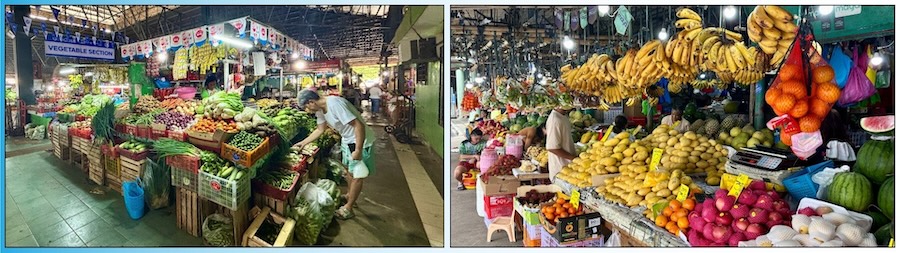
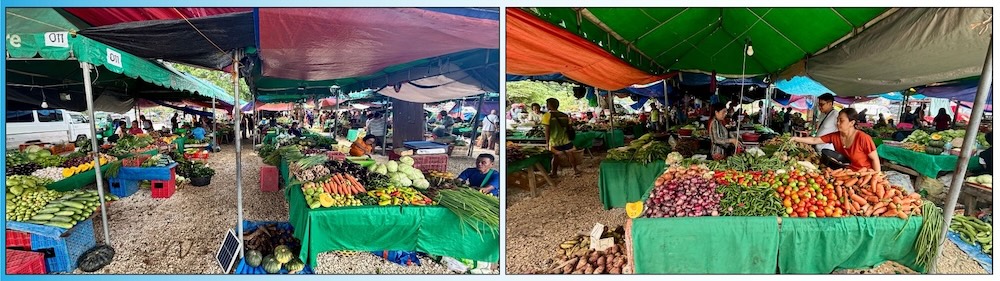
Like most parts of the Philippines, groceries can be bought from a wide variety of vendors in many different ways—from simple roadside fruit and vegetable stalls, to bakeries, to lively wet markets and larger public markets, to home-based sari-sari stores stocked with a little bit of everything such as snacks, canned goods, rice, and toiletries. These small shops are known for tingi, the practice of selling in tiny portions that allows families to buy only what they need for the day. At the other end of the scale are the big chains that operate the malls.
Alongside these everyday food supply options are more specialist outlets that cater to demand from hotels, restaurant and resort owners, expats, and middle-class Filipinos. These include suppliers of European cheeses, cured meats, sausages, wines, artisanal breads and pastries, and imported meats from America, New Zealand, South America, and Australia.
Eating at home is a big part of my daily life here, and for me grocery shopping in the Philippines is about balancing my budget while making the most of the available options—from small local vendors, to the weekly mall trip for staples, to picking up fresh fruit, vegetables, and fish from the town’s market, and occasionally buying a stock of imported meat.
You can eat well, stay healthy, and do it at a sensible cost here in the Philippines—you just need a little forward planning and an awareness that prices and availability can rise and fall. In the sections that follow, I’ll look at the main ways I shop for groceries and explain how I use each one, and why.
Mall Groceries
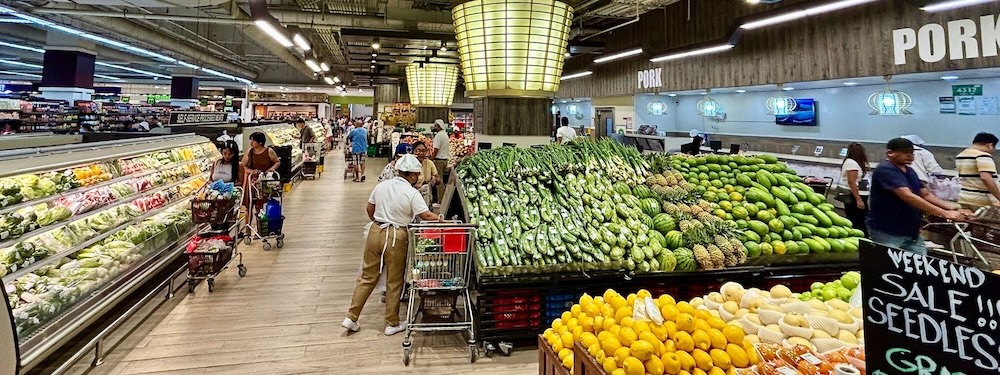
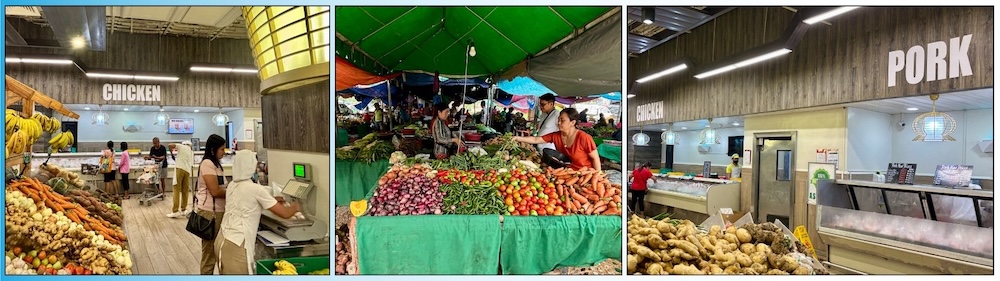
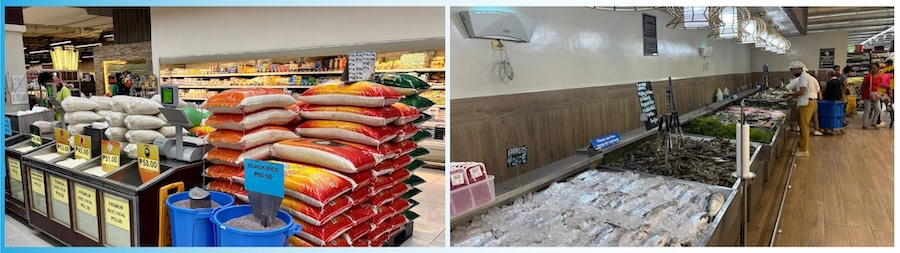
Shopping for groceries at the mall is my main option, and I usually go two to three times a month. It’s the best place to stock up on staples like rice, pasta, bread, canned goods, juice, diary, bottled water, coffee, cooking oils, and dried spices. These big supermarkets also include fruit and vegetable sections, fresh fish, meat and chicken counters, and a wide range of frozen foods.
I will always buy my staples this way, but I become more selective with fruit, vegetables, fish, and meat because of quality and cost. Fruit is often more expensive, while meat is typically produced within the Philippines, with pork and chicken dominating the coolers.
Vegetables can be good—especially potatoes, white onions, spring onions, and carrots. And when available, I like to buy imported bell peppers and tomatoes.
These can also be found at the local markets, but the local varieties, shaped by the climate and poorer soils, tend to be hardy with tougher skins, making them less ideal for lighter meals or salads. Buying fresh fish is another option, but here too, the limited selection, variable quality, and higher prices are often the deciding factors.
Meat Supplies
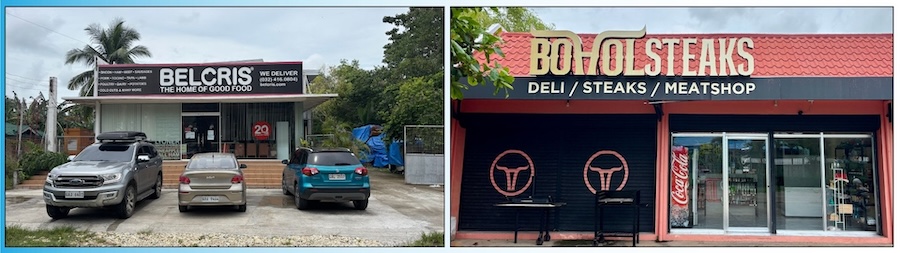
Filipino-style meat shops, like those in the mall groceries, are primarily geared toward the local market, selling good homegrown pork and chicken. Beef is available, but both the selection and range of cuts are much more limited. The meat is locally raised, and the cuts are usually prepared with slow-cooked Filipino dishes in mind.
Quality beef supply in the Philippines usually means imported meat from America, Australia, South America, or New Zealand. Because demand is strong, there is a wide range of outlets, from small businesses to larger enterprises that distribute and sell regionally. These shops offer good-quality products, from ground mince to steaks and fillets, but the trade-off is always the higher cost.
Markets
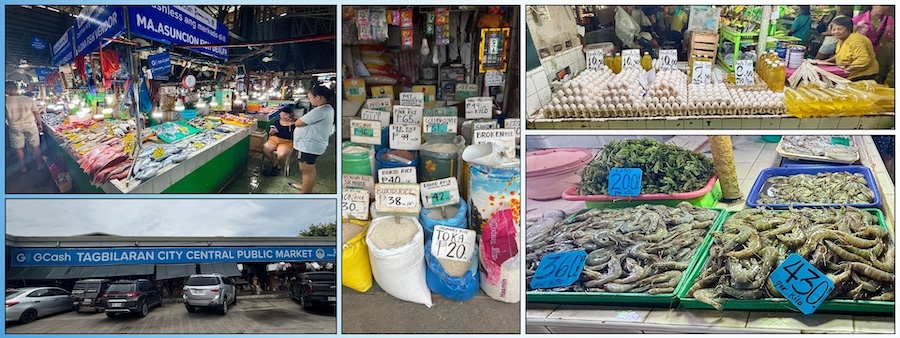
Market shopping is a big part of the Filipino way of life, and the small family-run businesses that operate there supply good-quality, cost-effective products. Fruit in particular is outstanding, with a wide selection of fresh vegetables, and the fish is often landed the same morning, giving you some of the freshest choices available.

Artisan
In my experience of living here, there is always food from home that you really miss and that isn’t directly available at the mall or markets. To fill this gap, enterprising expats have started small artisan food businesses aimed squarely at supporting the expat community.
In Panglao we have a great mix of European foods, such as sourdough breads, German sausages, sliced meats, wine, and of course a wide selection of cheeses. Most of these shops aren’t on the radar until you reach out to the community through Facebook groups or by word of mouth.
I’m always surprised by how quickly I get a reply when I put out a call out. Yes, it will be at a premium price, but sometimes you can’t put a cost on a taste of home—even if it’s only once in a while.

Cost of Groceries in the Philippines
Food means different things to different people, depending on the time of day, the type of meal, and of course the cost. Putting a single bottom line on grocery expenses for anyone considering a move to the Philippines would be misleading. What I can do, however, is share my own monthly and yearly grocery costs with confidence.
| Category | Comment | Monthly Cost (₱) | Monthly Cost (USD) | Yearly Cost (₱) | Yearly Cost (USD) |
|---|---|---|---|---|---|
| Groceries from Mall | Main bulk shopping including staples and household items. | 25,000 | ≈ $431 | 300,000 | ≈ $5,172 |
| Imported Meats | Special cuts of beef, lamb, and other non-local meats. | 3,100 | ≈ $53 | 37,200 | ≈ $642 |
| Artisan Foods | Breads, cheeses, sausages, and occasional treats. | 1,200 | ≈ $21 | 14,400 | ≈ $248 |
| Total | All combined grocery costs | 29,300 | ≈ $505 | 351,600 | ≈ $6,062 |
Note – Figures are based on my own average monthly spending across a 12-month period, for two people. Conversions from Philippine pesos (₱) to US dollars ($) use an exchange rate of ₱58 = $1, which may vary over time. Mall grocery costs also include basic household goods and toiletries, not just food items.

Dive The Philippines - Central Visayas
Get Involved & Dive - The Philippines is one of the world's best dive destinations, there are hundreds of destinations to explore and it's great excuse to head on out and do some local travelling. Get closer to the detail and read our articles and guides.







Frequently Asked Questions
How much does grocery shopping cost per month for expats in the Philippines?
Based on my own experience, two people typically spend around ₱29,300 per month (≈ $505), including mall groceries, imported meats, artisan food, and basic household goods. Costs will vary depending on lifestyle and location, but this figure is close to the average for many expats living long-term in the Philippines.
Are groceries in the Philippines cheaper than in Western countries?
Day-to-day groceries such as rice, fresh fruit, vegetables, pork, and chicken are usually cheaper than in the UK, US, or Europe. However, imported items like beef, dairy, pasta, and wine are more expensive because they rely on imports. This mix of lower local costs and higher import prices creates a unique balance in your monthly grocery bill.
Where do most expats buy their groceries in the Philippines?
Most expats combine several options: large mall supermarkets for staples, wet markets for fresh produce and fish, and specialist suppliers or small artisan shops for European cheeses, breads, and imported meats. Learning to balance these sources helps keep costs manageable while still enjoying a varied diet.
Is food supply reliable in the Philippines?
For basic local foods like rice, pork, chicken, vegetables, and fish, supply is generally reliable. Imported goods can be seasonal or inconsistent, and holidays like Christmas often cause short-term shortages. It’s wise to plan ahead and stock up when items are available, especially if you rely on imported products.
Why are imported foods more expensive in the Philippines?
The Philippines imports 100% of its wheat and large volumes of beef, dairy, and processed foods. Because of shipping costs, fuel, and port delays, these goods come at a premium. For example, bread, pasta, and steaks can cost significantly more than in countries where they are produced locally.
Can two people eat well and stay healthy on a reasonable grocery budget?
Yes. With forward planning and a mix of mall staples, fresh produce from markets, and occasional imported treats, two people can eat well and keep monthly grocery costs under ₱30,000 (≈ $500). The key is flexibility—embracing local foods while budgeting for imports when you really want them.

© 2025 Live Life The Philippines. All rights reserved.
Back to Top