

Kimud Shoal, Malapascua — a 12–23 m deep plateau rising from 150–200+ m of water in the Visayan Sea. This wide, shallow ridge forms a cleaning station where thresher sharks can be seen throughout the day.
Video taken: January 2026
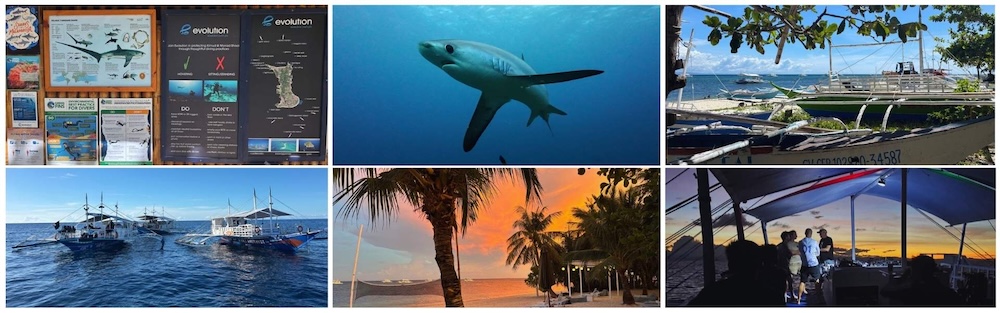
Malapascua Island, Northern Cebu — Bounty Beach is the island’s main dive hub, with white sand, stunning sunrises, and a wide range of accommodation and dive shops for every budget.
Images taken: January 2026
Diving Malapascua (2026) - Close Encounters
Malapascua Island is best known for its thresher shark encounters at Kimud Shoal and is one of the most iconic and accessible dive experiences in the Philippines.
As a destination Malapascua has a genuine island feel — sandy paths, no cars, beautiful beaches and a welcoming community — it’s simply a great place to spend some time.
So should you make Malapascua your one stop dive destination, for some it may work, but for the majority of divers picking up the highlights over 3 to 4 nights is more than enough before heading south to explore Moalboal, Dauin, Siquijor, Bohol and the outstanding dive sites found in Southern Leyte.
This guide provides dive site maps, including Kimud Shoal topography. We look at the highlights, best time to go, when and why, travel options for all budgets, dive resort reviews and recommendations.

Table of Contents
The links below let you move around the guide easily — jump to any section whenever you need it.
1.Dive Map & Kimud 3D Topography
2.Our Videos - Dive Malapascua

Read Our Dive Guides
We dive the Visayas and publish up to date site reviews to help divers plan better, dive smarter and get the very best out of the region.






Dive Map - Malapascua
The map highlights key transport points for reaching Malapascua, along with the island’s major nearby dive sites — including Monad and Kimud Shoal, Gato Island, Kalanggaman, and selection of local sites around the island itself.
Mapapascua: Dive Site Map - Click the map pins for location snippets
Map Source: John Hawkins | Leaflet | 2025
3D Topography - Kimud Shoal | Visayan Sea
Kimud Shoal lies about 6–8 km east of Malapascua, a compact seamount rising to a small plateau at 12–20 m before dropping steeply into 200 m+ water. The top is roughly 100–200 metres across and made up of low level coral outcrops and rough terrian. This abrupt rise from deep water, combined with steady current, draws pelagic thresher sharks, which ascend at first light to circle over the plateau for cleaning. For divers, it offers unusually shallow, reliable encounters with a species that normally lives far below recreational depths.
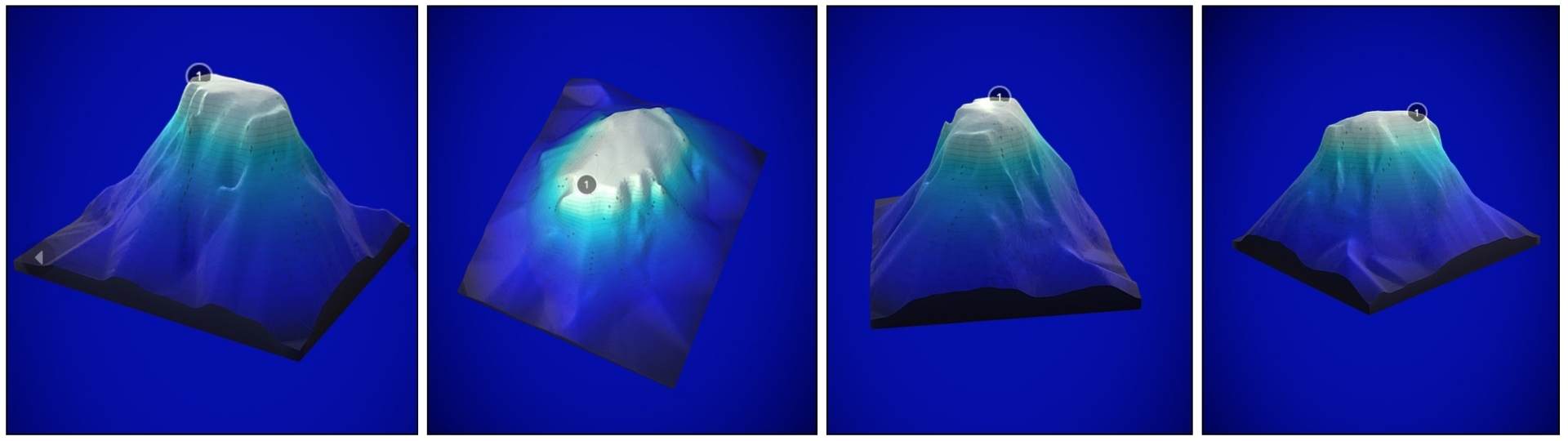
Kimud Shoal – Visayan seamount and home to Thresher Sharks
Topography Source: Evolution Dive Resort | 2025

Our Videos - Dive Malapascua
Dont miss our YouTube videos: We take a close look at Kimud Shoal and the challenging conditions encountered at Gato Island.
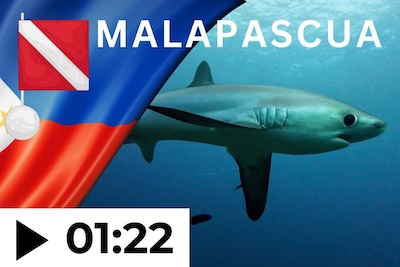
Get close to the Visyan Sea Thresher Sharks at Kimud Shoal
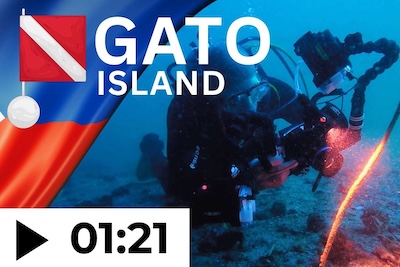
Strong current and low vizabilty made the gato dive challenging
Malapascua: Dive Gato Island – About 40–50 minutes by boat from Malapascua, Gato offers rocky overhangs, coral outcrops, small caves, and resident white-tip sharks. The site’s swim-through tunnel is a highlight, though on my visit it wasn’t accessible due to poor visibility and strong current.
Video taken: January 2026
Diving Highlights & Final Thoughts – Malapasqua Island, Cebu
Kimud Shoal - Thresher Sharks
For me, Kimud Shoal and its population of thresher sharks define diving in Malapascua. There are plenty of other reefs and nearby islands to explore, but nothing matches the experience Kimud consistently delivers. It’s the site that makes Malapascua truly unique.
Because it’s the island’s main attraction, the site gets busy quickly. Choose a dive centre that goes out early—this makes a huge difference. I dived with Evolution, who run a daily 5 a.m. boat, and heading east at first light is part of the experience. You catch a great sunrise and usually arrive among the first groups to moor up on the shoal.
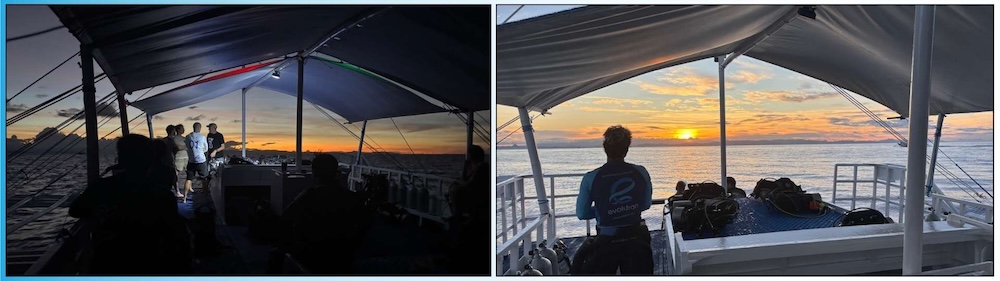
Malapascua: Sunrise heading out to Kimud Shoal
Image Taken: December 2025
The key to good encounters at Kimud Shoal is simple: follow your dive master’s briefing. They dive here year-round, understand the sharks’ behaviour, and know exactly where the cleaning stations are. Stay low, stay together, and don’t move ahead of the group. When divers maintain a calm, compact profile, the sharks will approach naturally. On my visit, I saw too many divers—especially during the second, more crowded dive—hovering high in the water or swimming after sharks, which only spooks them and reduces the experience for everyone.
Malapascua – Reefs, Islands & Final Thoughts
Outside of Kimud Shoal, Malapascua offers a wide range of diving opportunities. There are the local sites to the north of the island, the outer-island trips to Gato, Kalanggaman, and Capitancillo, and of course Monad Shoal with its chance of spotting tiger sharks. It’s a varied mix that gives divers plenty to explore beyond the main thresher encounters.
During my Malapascua dive trip in early December 2025, I dived Kimud Shoal every day and was never disappointed—the experience there is without question the highlight of diving in the area. The reefs and island dives, however, were more of a mixed bag. Many of these sites had clearly been impacted by Typhoons Tino, Uwan, and Kato, which passed through the region in November. This was especially evident at Gato Island, where very little soft or hard coral remained on the rock walls or the surrounding sea floor.
Malapascua remains one of the premier dive destinations in the Visayas. You can easily enjoy an extended stay here—the island is a beautiful place to slow down and spend time. But if you're travelling around the region to dive, three to four nights is usually enough to see the thresher sharks, fit in a few local afternoon sites, and then continue south to enjoy the excellent diving in Dauin, Siquijor, and Bohol.

Best Time to Dive: When to Go and Why
Malapascua can be dived year-round, but choosing the best time to visit depends on the season. The Central Visayas experiences three seasons: the tourist season, the monsoon season, and the typhoon season. The main tourist season runs from early December through May, with Christmas, New Year, and Easter being the peak periods when prices rise and accommodation books out quickly.
Two monsoons influence the region. The southwest monsoon, the habagat, brings winds and wetter conditions from May to October, while the northeast monsoon, the amihan, runs from November to April and generally brings cooler, drier weather. Both can produce rain, but it is the habagat that is typically associated with more unsettled conditions.

Dive Weather - Understand the Seasons, the Science and the Impact
Tropical cyclones pose the biggest weather risk, as storms that intensify into typhoons can affect travel across the Central Visayas. The greatest likelihood of impact is from late October into December. These systems are more than just a few days of rain and wind—they can disrupt ferry routes, local transport, and island access.
During my time living in the Central Visayas, I’ve found that each year’s weather pattern is different. 2024 was very hot and dry, whereas 2025 has been marked by frequent wind and rain. If you’re planning a trip to Malapascua and the wider region, try not to over-plan. And, if your schedule allows, avoid the peak holiday periods. The weeks just before Christmas work well, February through to Easter is quieter with more settled weather, and the stretch after Easter to August or September is low season and often one of the best times to visit.

Reaching Malapascua Island: Routes & Options
Most travellers reach Malapascua by flying into either Cebu or Panglao. Cebu’s Mactan–Cebu International Airport (MCIA) handles the majority of domestic and international arrivals and is the most direct gateway for getting to the island. Panglao–Bohol International Airport is a good alternative if you’re combining Malapascua with diving around Panglao, Anda, or the wider Bohol region.
For those starting in Panglao or Tagbilaran, OceanJet runs regular fast-ferry services to Cebu City’s Pier 1. The crossing typically takes around two hours, depending on sea conditions, and tickets cost roughly ₱1,000. Schedules shift with the seasons, so it’s worth checking ahead. Arriving at Pier 1 also puts you close to the Northern Bus Station—only a 5–10 minute taxi ride—which makes onward travel to Maya straightforward.

Providing fast efficient connection for divers exploring the Central Visayas
From Cebu City, the most economical way to reach Malapascua is by Ceres air-conditioned bus from the Cebu North Bus Terminal. Fares are around ₱350, and for a 4–5 hour ride it’s worth buying two seats for added comfort. Buses run frequently and follow a straightforward route to Maya Port. Avoid the van services—they’re cramped and uncomfortable for long journeys. If you choose the bus, start early; leaving too late in the day increases the risk of missing the final public ferries to Malapascua.
A faster and more comfortable alternative is a taxi or private transfer from Cebu to Maya. Many resorts offer door-to-door arrangements, though prices can reach up to ₱8,000 depending on the vehicle and whether a private boat is included. You can also hire a regular taxi directly; on my trip I paid ₱2,500 from Maya back to Cebu, which is a good benchmark for the route. Private transfers are the quickest option and make the connection to a resort-arranged boat much smoother.
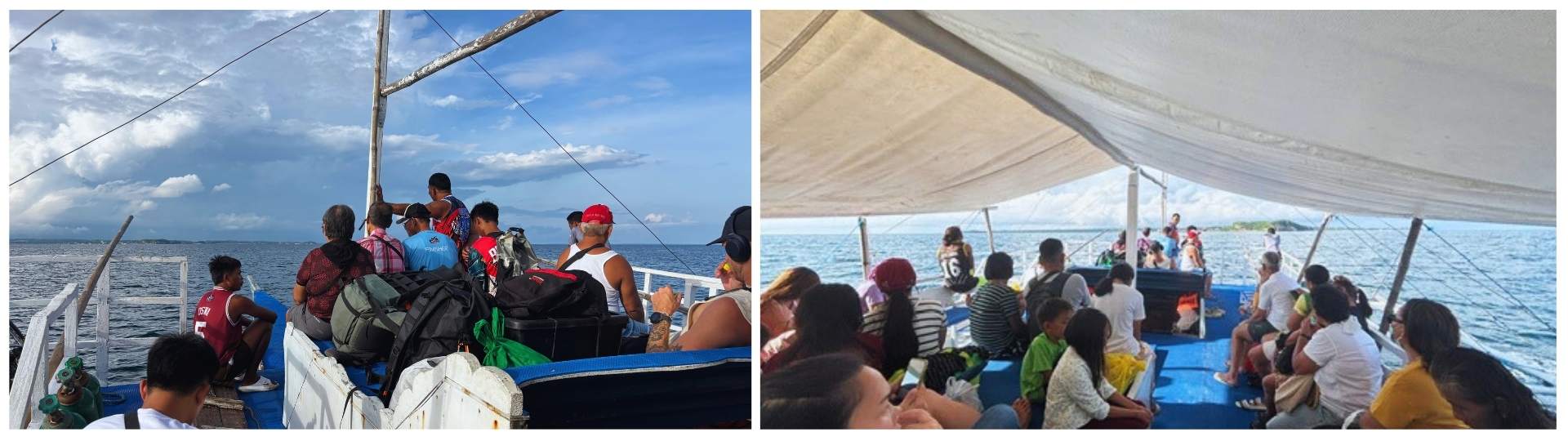
Malapascua to Maya Public Ferry
Image Taken: December 2025
From Maya to Malapascua, small public ferries run throughout the day, with the first crossings usually around 6:30–7:00 a.m. The trip takes about 30 minutes in good conditions. Boats depart once they have enough passengers, and the last public departures are generally between 4:30 and 5:30 p.m., depending on tides and weather. Because timings can shift, it’s wise to allow some flexibility. On arrival, porters can help with luggage, and most resorts are only a short walk or motorbike ride from the Malapacua pier.
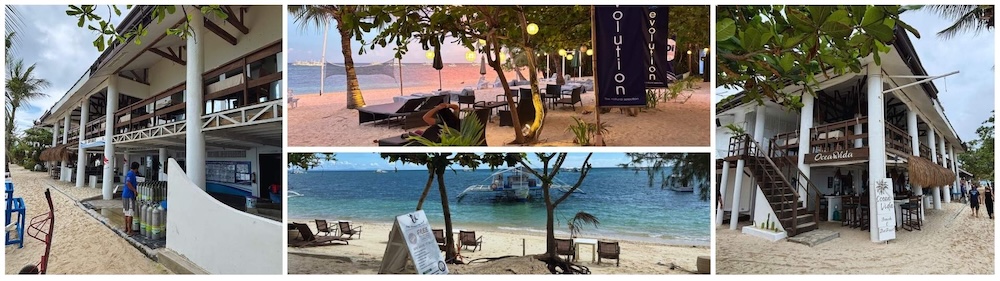
Malapascua Bountry Beach: The island’s main stretch of sand and the hub for diving, restaurants, and beachfront life.
Images taken: December 2025
Where to Stay: Malapascua Island
Most of Malapascua’s accommodation is centred along Bounty Beach, the island’s main stretch of sand and the hub for diving, restaurants, and beachfront life. Options range from simple fan rooms and backpacker lodges to mid-range resorts and more dive-focused properties. Staying on Bounty Beach keeps everything within easy walking distance, including dive shops, boat departures, and evening dining.
Malapascua’s dive scene developed around its earliest operators, with Exotic Island Dive Resort recognised as the island’s first established dive resort and a pioneer of thresher shark diving. Evolution arrived later and helped shape the modern dive culture with a strong focus on sustainable practices and professional training. Today, both sit alongside several reputable dive centres on Bounty Beach, offering travellers a good spread of choices to suit different budgets and dive styles.
On my own trip, I stayed and dived with Evolution Dive Resort and had an excellent experience. The resort is very much dive-focused, with well-run teams, knowledgeable guides, and an efficient daily schedule that makes getting to sites like Kimud Shoal straightforward. The food was consistently good, and the restaurant and bar staff were genuinely friendly and helpful, which added to the relaxed atmosphere around the resort. For me, it’s simply a great place to stay if you want a well-run, comfortable base with easy access to the best diving Malapascua has to offer.
Live in the Philippines - Money & Cost
If you are thinking of making the Philippines a home, we look closely at the real cost of living and how to best managing your money once you are here.








Frequently Asked Questions – Diving in Malapascua
What makes Malapascua famous for diving?
Malapascua is best known for its daily thresher shark encounters at Kimud Shoal, one of the few places in the world where threshers can be seen reliably at recreational depths. The island also offers a mix of reefs, walls, and offshore sites, giving divers a varied set of experiences beyond the main shark dives.
Is Kimud Shoal suitable for beginner divers?
Kimud Shoal is manageable for most certified divers, but good buoyancy control is essential. The site can have current and limited visibility, and mornings can be busy with multiple boats. Most dive operators ask for PADI Advanced Open Water (or equivalent) and may also request proof of a minimum number of logged dives, so it’s important to check requirements before you book. Once you’re in the water, following your dive master closely is key, as they know the cleaning stations and how to position groups for the best encounters.
When is the best time of year to dive in Malapascua?
Diving is possible year-round, but December to May offers the most settled conditions. February through Easter is particularly reliable. Late October into December carries a higher chance of typhoons, while May to October can bring wind and rain from the southwest monsoon.
How do I travel from Cebu to Malapascua?
The most economical option is the Ceres air-conditioned bus from Cebu North Bus Terminal (₱350). For comfort on the 4–5 hour ride, some travellers buy two seats. Taxis or private transfers are faster; on my trip, a Maya–Cebu taxi was ₱2,500. Resort transfers can cost up to ₱8,000 depending on inclusions.
How does the ferry from Maya to Malapascua work?
Public boats run throughout the day, with the first departures around 6:30–7:00 a.m. and the last between 4:30 and 5:30 p.m. The crossing takes about 30 minutes. Boats leave when they have enough passengers, and schedules can shift with tides and weather, so travelling earlier in the day is advised.
Where should divers stay on Malapascua?
Most accommodation is along Bounty Beach near the dive shops and boat departures. Exotic Island Dive Resort pioneered the island’s dive scene, while Evolution has become known for sustainable diving and professional training. I stayed with Evolution on my trip and rated it highly for its dive teams, food, and friendly staff.

© 2025 Live Life The Philippines. All rights reserved.
Back to Top