

Moalboal: Dive Sites Panagsama 1 & 2 – These sites are home to the famous sardine run, where millions of sardines school close to shore every day.
Video taken: September 2025
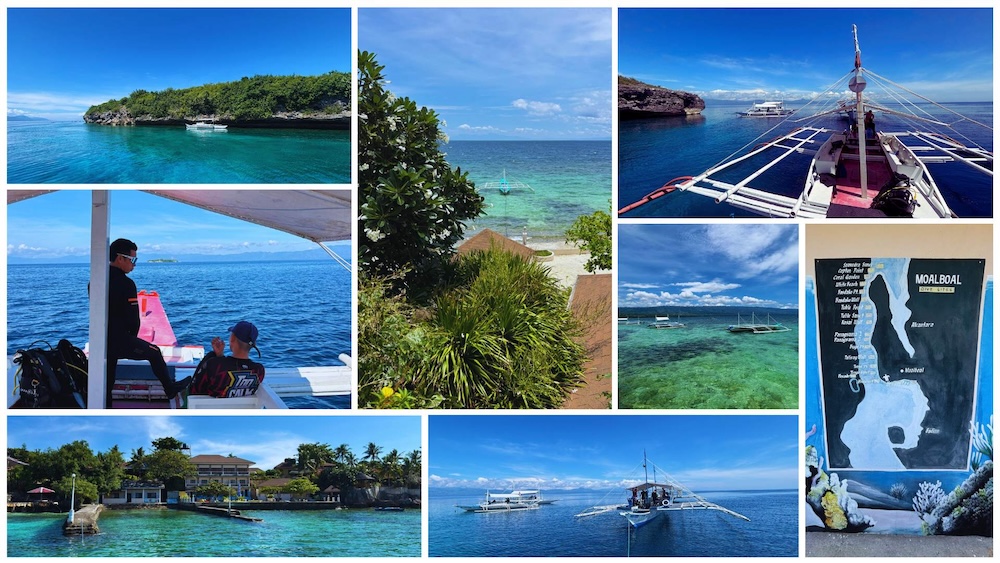
Moalboal, Cebu: Located on the western side of Cebu island, facing directly towards Negros and siting on the Tanon Strait is home to Pescador Island and the coral reefs of the peninsula.
Diving Moalboal (2026) - A Million Reasons
Moalboal is one of the most popular dive destinations in the Philippines. The famous sardine run happens year-round just off Panagsama Beach, and the peninsula offers more than 17 established dive sites, including Pescador Island with its dramatic walls and caves.
However, the diving experience here has changed following the impact of Super Typhoon Odette in December 2021, and certainly the feedback I get from travelling divers is mixed. So should Moalboal be on your dive itinerary, and do you still have a million reasons to go?
We provide locations, dive site maps and a closer look through our dive videos. We look at the impact of Typhoon Odette and reef recovery, give you the up-to-date dive highlights, best time to go, routes and places to stay away from the crowd.

Table of Contents
Click a topic below to jump directly to that section of the guide.
1.Dive Map
3.Know About Super Typhoon Odette

Read Our Dive Guides
We dive the Visayas and publish up to date site reviews to help divers plan better, dive smarter and get the very best out of the region.







Dive Map – Moalboal & Pescador Island
The map highlights the main transport hubs — Cebu, Tagbilaran, and Panglao Airport — as well as a selection of dive sites around the Moalboal peninsula and Pescador Island.
Moalboal & Pescador Island: Dive Site Map - Click the map pins for location snippets

Our Videos - The Sardine Run & Pescador Island
Take A Closer Look: Great diving at the sardine run and Pescador Island . We shoot video on every dive and share across our dive articles and Youtube channel, real time, real diving.
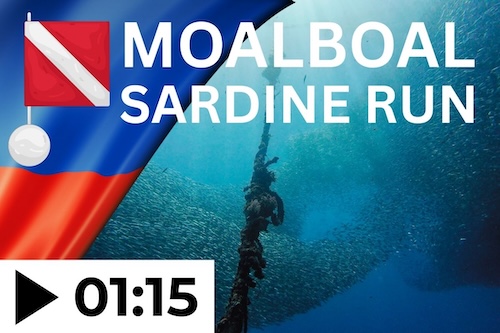
See the incredible Sardine Run at Panagsama Dive Site Moalboal 2026.
Located 3.5 km off the coast, offers excellent diving, with Cathedral Cave standing out as one of the highlights.
See authentic dives from sites across the central Visayas on YouTube.
Super Typhoon Odette – Made Landfall December 16th 2021. Over two days the storm affected more than 10 million Filipinos and caused widespread damage to coastal environments.
Super Typhoon Odette
On December 16, 2021, Super Typhoon Odette (international name Rai) made its first landfall on Siargao Island before moving westward across the central Philippines over the following two days. The storm brought wind gusts of up to 260 km/h and affected more than 10 million people nationwide. Around 7 million individuals required humanitarian support, with an estimated 2.4 million needing urgent assistance.
Moalboal lay directly in the path of the typhoon and suffered severe damage to its community, local businesses, and coastal environment. In a town where tourism — and diving in particular — underpins much of the local economy, Odette’s destruction was a major setback.

Dive Weather - Understand the Seasons, the Science and the Impact
During my visit to Moalboal, I spoke with many people about the event — from tricycle drivers to hotel staff and dive boat crews — and their stories carried the same message of shock at the typhoon’s intensity. One dive master summed it up vividly when he told me, “This was no normal wind. People had to walk like dogs,” describing how the force of the storm was so strong they had to crouch low to the ground just to move forward.

Moalboal Reef – Road to Recovery
Marine recovery after Typhoon Odette began with the temporary closure of Pescador Island, giving the reefs a chance to rest while early restoration work took hold. The Cebu Provincial Government and the Department of Tourism – Central Visayas coordinated coral planting projects to help rebuild reef structure, while local and visiting divers contributed through a Coral Aggregation Program, providing hands-on support. Institutions in the area also carried out wildlife rescue efforts, including turtle protection, as part of broader reef recovery work.
To this day, marine recovery continues both at Pescador Island and along the peninsular coastline. I found that shallow, sloping coral shelves down to around 10 metres showed very heavy scouring, with little to no visible recovery. At the wall drop-offs, however, beautiful soft and hard corals could still be seen at most sites, with clear signs of regrowth. The walls showed some storm impact, but not to a significant degree, largely due to their depth.
So is it time to dive Moalboal? In the words of our hotel manager, "people are starting to come back." I really enjoyed the diving here — it is generally a beautiful place to spend time. Pescador Island has some great structure, beautiful sea fans, and big caves to explore. For me, the peninsular coastline offered good walls and a mix of marine life, and of course the main attraction is still there in the millions: the Moalboal sardine run.

Philippines Society - Getting to Know the People
The Philippines is a beautiful country, but when you look deeper you quickly realise it is the people who make it truly shine. Here we explore the country’s history, culture, and the everyday realities and challenges of being Filipino in a modern world.







Pescador Island – Just a short boat ride offshore, the island is ringed by a very narrow coral shelf that drops into a vertical wall down to 35m. Highlights include Cathedral Cave and beautiful fan corals in the deeper part of the wall.
Video taken: September 2025
Diving Highlights & Final Thoughts – Moalboal & Pescador Island
Sardine Run
I’ve spoken to dive shop owners and dive masters who operate out of Panglao, and the conversation always goes the same way when you mention the Moalboal sardine run: “Well, we have sardines here too.” In part that’s true — there are sardines directly off Alona Beach and at Napaling Reef. But nothing really prepares you for the spectacle at Moalboal. They gather here in their millions, and if you catch them on a clear day with sunlight streaming down through the water, it’s very hard to beat.
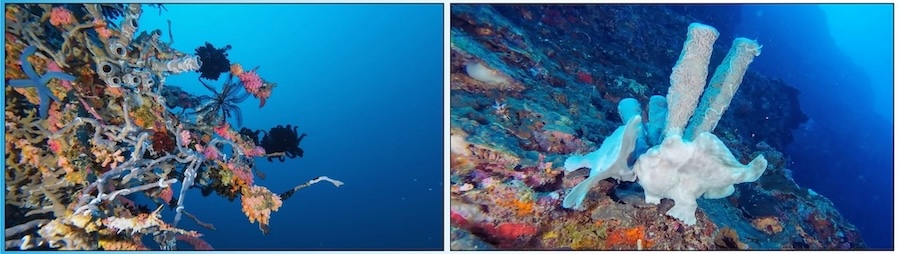
Pescador Island
I really like this site — every time I come here I see something new. You can cover the whole island perimeter in two dives, explore the Cathedral Cave, and follow the vertical walls around. There are some truly beautiful coral structures deeper down that stand out when you put a light on them. The macro life is excellent too — make sure you have a spotter with keen eyes — and I almost always see giant frogfish here. Add in the occasional turtle hidden in the wall ledges, then for me its good diving.
Final Thoughts
The Moalboal and Pescador Island reefs are still recovering from the impact of Super Typhoon Odette. In all the areas I dived, including Pescador Island, coral shelves down to around 10 meters were scoured clean, with little to no sign of regrowth — and that’s the hard truth. Along the wall drop-off, you can still find isolated patches of beautiful coral gardens that once stretched all the way to the shoreline.
So what does this mean for Moalboal? In my view, it is still very much a go-to destination for divers coming to the region. When you consider its relative position for dive travel, the wide range of accommodation choices, the sardine run, Pescador Island, and the diverse marine life found here, it’s clear that Moalboal remains special. Sometimes it’s best to set aside the “was” and focus on the “now” — and if you do, you’ll quickly see that Moalboal is a stop worth making.

Best Time to Dive: When to Go and Why
Like all of the Central Visayas, Moalboal has two distinct seasons shaped by the Amihan and Habagat monsoons. The Amihan (northeast monsoon, November to May) brings cooler, drier air and generally calmer seas. The Habagat (southwest monsoon, June to October) brings warmer, humid weather with heavier rain, stronger winds, and is also the period when the region faces the highest risk of typhoons.
Outside of typhoon lows and direct impact, Moalboal is geographically well protected from the monsoons. Sitting on the Tañon Strait between the mountains of Negros and Cebu, the area experiences noticeably lower wind levels compared to the Cebu Strait and especially the dive sites around Panglao and the Bohol Sea.
The low and high seasons here align closely with the monsoons — low season from June to October, and high season from November to May. In reality, as with most places in the Central Visayas, diving is possible throughout the year. While the low season carries a greater chance of weather impact, in my view it’s minimal, and there’s something appealing about the quieter, more laid-back atmosphere that this period brings to Moalboal.

Reaching Moalboal: Routes & Options
Moalboal is a natural stop-off point for dive trips in the region. Whether you’re traveling overland from Cebu City on your way to Dauin and Apo Island, or coming across from Panglao via Siquijor and Negros before looping back up to Cebu, it fits easily into most Central Visayas dive itineraries.
Getting to Moalboal is straightforward from Cebu City, with regular buses and V-hire vans running from the South Bus Terminal — the trip takes around three hours depending on traffic. From Dauin and other parts of Negros Oriental, the route is via ferry: cross from Sibulan, just north of Dumaguete, to Liloan at the southern tip of Cebu, then continue north by bus or van along the coast to Moalboal. This makes the town accessible both from Cebu’s urban hub and from the dive destinations of Negros.
If you are in Panglao, Bohol and want to bypass Siquijor, Dumaguete, and Dauin, you can take the Apekop ferry from Momo Beach that goes directly to Oslob. From Oslob, you can pick up a bus or van heading south to Santander, then continue north up Cebu’s western coast, passing Badian and other coastal towns before reaching Moalboal. I often use this route when visiting Moalboal — the ferry departs Momo Beach at 6:30 am, and I usually arrive at the resort in time to join an afternoon dive.
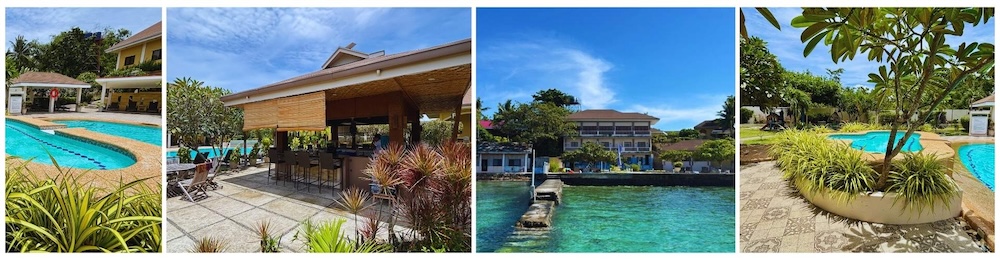
Moalboal: A destination with a wide range of accommodation to suit every budget, from simple guesthouses to full-service dive resorts. The images feature Turtle Bay Dive Resort, set on the seafront south of Basdiot, with gardens, a pool, and its own dive center.
Images taken: 2025
Where to Stay: Moalboal
The infrastructure, including places to stay, has rebounded very well after the direct impact of Super Typhoon Odette. On my last visit in early September 2025, I had to look hard to see any remnants the storm had left behind. This quick recovery also reflects the resilience of the local communities, who rebuilt their homes, businesses, and dive operations with remarkable determination, ensuring Moalboal remains welcoming to visitors.
One of the attractions of Moalboal is the wide range of accommodation — from budget-friendly guesthouses and backpacker hostels to mid-range hotels and full-service dive resorts. Whatever your budget or travel style, you’ll find plenty of choices within easy reach of the beaches and dive sites.
When I come here I like to use the Turtle Bay Dive Resort. It is located south of the main tourist area of Basdiot, directly on the seafront. The resort is quiet and welcoming, with a good range of rooms to suit different budgets, beautifully kept gardens, a swimming pool, and a dedicated dive center with two bangkas running daily trips to Pescador Island and nearby dive sites.
Be mindful that if you are visiting Moalboal during the high season, especially around holiday periods such as Christmas, New Year, and Easter, it’s best to plan ahead. Resorts and dive shops can book out quickly, and transport options may be busier than usual, so making reservations in advance will save you hassle and ensure you get the choices you want.
Live in the Philippines - Money & Cost
If you are thinking of making the Philippines a home, we look closely at the real cost of living and how to best managing your money once you are here.








Frequently Asked Questions
Is Moalboal still worth diving after Typhoon Odette?
Yes, with realistic expectations. Shallow reef shelves down to around 10 metres were heavily scoured and show limited recovery. However, the wall dives and deeper sections — including those at Pescador Island — remain in good condition, with healthy coral growth, caves, and consistent marine life.
Can you still see the sardine run in Moalboal?
Yes. The sardine run remains present year-round and is still Moalboal’s main attraction. Millions of sardines gather just offshore, often in shallow water, making it accessible to both snorkelers and divers, especially on clear days with good sunlight.
When is the best time to dive in Moalboal?
Diving is possible year-round, but the best conditions are typically from November to May during the Amihan season, when seas are calmer and visibility is more consistent. From June to October, weather is warmer and wetter, with a slightly higher chance of disruption.
How does Pescador Island compare to Moalboal’s house reefs?
Pescador Island offers more dramatic diving, with vertical walls, caves, and stronger coral growth at depth. While Moalboal’s house reefs are convenient and still enjoyable, Pescador Island is generally considered the highlight of the area.
Is Moalboal suitable for beginner divers?
Yes. Moalboal has a mix of gentle slopes and calm wall dives suitable for beginners, and many dive shops tailor dives to experience level. Conditions vary by site, so new divers should follow local guidance when choosing dive locations.
How many days should you plan for diving in Moalboal?
Most divers find that three to five days is ideal. This allows time to dive Pescador Island, explore several wall sites, experience the sardine run under different conditions, and still enjoy Moalboal’s relaxed pace.

© 2025 Live Life The Philippines. All rights reserved.
Back to Top