Power Outages & Brownouts Philippines (2026) - Be Prepared
May 2026 Article Updates
• Updated NGCP Links
• Refreshed planning ahead options
In the Philippines, power outages and brownouts are a regular part of life, particularly outside major cities. They are shaped by how electricity is generated, transmitted, and distributed across the country, as well as by regional infrastructure limits, equipment reliability, and weather events. While many outages are scheduled and announced in advance, unscheduled brownouts remain common and disrupt everyday life without warning.
Here we look at why the Philippines has power resource challenges, how the supply companies manage networks, and why the existing networks continue to fail demand. Electrical grid upgrades, both national and local, continue to be rolled out across the country, but should we just sit and wait for the fix? For the majority of us, the answer is no, and we simply bridge the gap with energy alternatives.

Table of Contents
Click a topic below to jump directly to that section of the guide.
1.Energy Sources Powering the Philippines
2.National Grid Operations — NGCP
3.Role of Electric Cooperatives
4.Be Prepared - Energy Alternatives

Explore Our Hub Pages & Go Further With Finance & Business
Our three hubs bring the site together, making it easy to navigate and find the articles that matter to you. Keep Reading — We focus here on managing your finances effectively, work & business opportunties and choosing the right visa for your lifestyle.





Join Our Monthly Newsletter
Stay connected with Live Life The Philippines — your direct link to what’s changing and developing across the islands. Get instant access to our Retiree & Expat Budget Planners, plus regional updates, new guides, diving insights, and resources for living long-term in the Philippines.

Get the latest insights from across the Philippines — regional updates, living guides, diving reports, and culture in focus.

Energy Sources Powering the Philippines
The Philippines is relatively poor in natural energy resources. While the country sits within a volcanically active zone that provides access to geothermal energy, it lacks significant reserves of coal, oil, or natural gas. As a result, much of its fuel for power generation is imported, adding cost and vulnerability to supply interruptions.
Electricity generation across the country relies heavily on fossil fuels, with coal still the dominant source. Renewable energy—mainly geothermal, hydro, and increasingly solar—has grown steadily but remains a smaller share of the overall mix.
Whilst these resources provide roughly 30,000 MW (30 GW) of installed generation capacity—supporting a population of over 115 million—this remains low compared with neighbouring countries of similar size. Nations such as Vietnam and Thailand produce more than twice as much electricity per person, and even smaller economies like Malaysia maintain far higher generation capacity. This shortfall is the root of the country’s power challenges: as demand grows, supply and infrastructure continue to struggle to keep pace, leading to the brownouts that affect homes and businesses nationwide.
Table content: Breakdown of the Philippines’ main energy sources, their approximate share of total electricity generation, and the regions where each resource is most prominent.
| Energy Source | Approx. Share of National Power | Primary Supply Regions / Notes |
|---|---|---|
| Coal | ≈ 60% | About 80% imported, mainly from Indonesia and Australia; major plants in Luzon and Visayas. |
| Natural Gas | ≈ 15% | Domestic supply from the Malampaya field off Palawan, with rising LNG imports for Luzon. |
| Hydropower | ≈ 9% | Generated from dams and reservoirs in the mountainous regions of Luzon and Visayas. |
| Geothermal | ≈ 10% | Heavy concentration in the Visayas and the Mindanao Geothermal Production Field (Mt. Apo flank, North Cotabato) — the Philippines is one of the world’s leading geothermal producers. |
| Solar, Wind & Biomass | ≈ 6% | Distributed small- to mid-scale plants across all regions; solar expansion fastest in Luzon and Visayas. |

National Grid Operations — NGCP
The National Grid Corporation of the Philippines (NGCP) operates and maintains the country’s high-voltage transmission network, linking power generation companies with the cooperatives and utilities that distribute electricity to consumers. It transmits bulk power from generation plants to substations, where distribution begins.
The national grid now interconnects Luzon, Visayas, and Mindanao through more than 20,000 circuit kilometres of high-voltage lines and hundreds of substations. Yet development remains uneven. Luzon benefits from the most extensive and stable infrastructure, while the Visayas and Mindanao still face congestion and limited capacity, especially in areas where demand has outpaced expansion. Upgrades and new backbone lines are underway, but progress has been slower than planned.

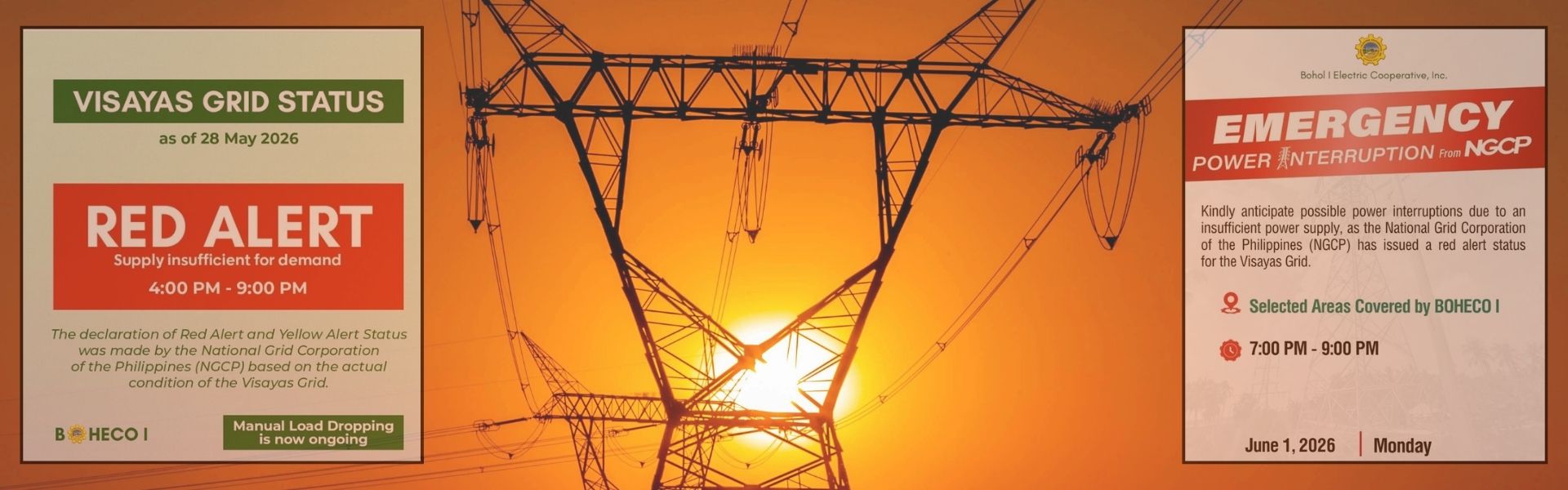
Follow NGCP’s official Facebook page for real-time power interruption notices, maintenance schedules, and nationwide grid updates.

For official advisories, grid status reports, and quick updates during scheduled and emergency power interruptions.
Because of these gaps and the limited redundancy of many transmission routes, even routine maintenance can lead to widespread interruptions. In a mature grid, power can be rerouted through alternative lines; in the Philippines, many corridors remain single connections between provinces or islands. When a line is taken offline for repair, entire areas can lose supply — contributing to the scheduled “brownouts” that remain a regular feature of daily life.

Philippines Society - Getting to Know the People
The Philippines is a beautiful country, but when you look deeper you quickly realise it is the people who make it truly shine. Here we explore the country’s history, culture, and the everyday realities and challenges of being Filipino in a modern world.







Role of Electric Cooperatives
Electric cooperatives form the final stage of the country’s power network, taking electricity from NGCP substations and distributing it to homes, businesses, and public facilities. Operating under the National Electrification Administration (NEA), they maintain the lower-voltage distribution lines, install transformers, and manage customer service, metering, and billing within their franchise areas.
Like the national grid, many cooperative systems lack redundancy. Large parts of their local networks rely on single feeder lines or aging equipment, meaning that even minor maintenance or weather-related damage can interrupt supply to entire barangays or towns. These weaknesses compound the limitations of the national grid itself — when transmission issues occur upstream, local cooperatives often have little flexibility to isolate or reroute supply, turning small disruptions into widespread brownouts that affect entire communities.

Be Prepared - Energy Alternatives
From generation shortfalls to grid limitations and aging distribution lines, every stage of the power system carries its own weaknesses — and together they make brownouts an unavoidable part of living life in the Philippines.
We can, of course, sit them out — most outages last four or five hours, with the occasional one stretching to twelve. But for me, and certainly living here in Panglao, Bohol, it’s the frequency of the outages that wears you down more than the inconvenience itself.
Because of these ongoing challenges, homeowners and businesses across the Philippines are increasingly turning toward power independence — often driven by solar-battery systems that are cleaner, quieter, and far more affordable than they were just a few years ago. As technology improves and prices continue to fall, these small-scale renewable setups are becoming a practical, everyday solution — a quiet sign that, even in the face of unreliable infrastructure, people are finding their own ways to keep the lights on.
Easy Fixes & Planning Ahead for Outages
Provider Communications – Keep on top of the planned outage schedules from both NGCP and your local cooperative. Knowing when maintenance is planned helps you prepare early and avoid unnecessary disruption.
Cell Phones – Always keep your phone charged and loaded. If all else fails and you need assistance or updates, having mobile service available can make all the difference.
Wi-Fi Routers – Purchase a dedicated power bank for your router — they’re relatively inexpensive and plug-and-play. You’ll be surprised how much easier life feels when you can stay connected to the internet worry-free during a power drop.
Water Supply – Longer power outages can affect mains water pressure. Keep bathroom wash tubs filled and store spare potable water for drinking and cooking.
Fans With Integrated Powerbanks – Keeping a couple of fans operational in the home really helps keep things comfortable for short periods, even as a quick fix.
Petrol Generators – A small portable petrol generator remains one of the most common and effective solutions for longer outages. Good quality branded models from Honda or Yamaha (2–3 kVA) can comfortably run lights, fans, a refrigerator, and even a small air-conditioner or TV. However, you will need to manage exhaust fumes and store fuel safely.
Home Power Banks – Readily available on the market from companies such as EcoFlow, these units are a more expensive option but provide reliable battery capacity for small appliances such as fans, lights, and laptops. A 1,000 Wh model typically costs around ₱60,000 but offers enough stored power to keep essentials running during multi-hour brownouts. They’re a great alternative to a traditional generator — quiet, maintenance-free, and ideal for households that want backup power without fuel, noise, or fumes.
Solar Power Systems – Solar remains a long-term investment rather than an immediate solution. In the Philippines, costs typically start around ₱100,000 and can rise to ₱600,000 or more depending on system size and storage capacity. It’s not a cheap option, but it will reduce reliance on the grid, lower electricity costs, and provide greater resilience during outages.
Dive The Philippines - Central Visayas
Get Involved & Dive - The Philippines is one of the world's best dive destinations, there are hundreds of destinations to explore and it's great excuse to head on out and do some local travelling. Get closer to the detail and read our articles and guides.






Frequently Asked Questions
Why are brownouts so common in the Philippines?
Brownouts are frequent because the country’s power generation and grid infrastructure have not fully kept pace with population growth and demand. Many transmission and distribution lines still lack redundancy, so even minor faults or maintenance work can cause widespread outages.
Who restores power after a brownout?
Restoration depends on where the fault occurs. NGCP handles transmission-level issues, while local electric cooperatives or utilities repair faults within their distribution areas. Both coordinate to restore power as quickly as possible.
How long do brownouts usually last?
Most scheduled brownouts last four to five hours, while unplanned ones vary depending on the cause. Major repairs or severe weather can extend outages to 12 hours or more, especially in provincial and island regions with limited backup lines.
What causes unscheduled brownouts?
Unscheduled brownouts are typically caused by equipment failure, overloading of the grid, or storm-related damage to transmission and distribution lines. In rural areas, strong winds, tree contact, or salt buildup during dry season can also trigger automatic shutdowns to protect the system.
Are home power banks worth the cost?
Yes — for households that experience regular brownouts, home power banks are a practical investment. A 1,000 Wh model costing around ₱60,000 can power fans, lights, and Wi-Fi for several hours. They’re quiet, maintenance-free, and ideal for smaller homes where a fuel generator isn’t practical.
What can households do to prepare for power interruptions?
Preparation makes life easier during brownouts. Keep devices charged, store water for essential use, and invest in small power banks or compact home power stations for lighting, fans, and Wi-Fi. Following outage schedules from NGCP and your local cooperative helps you plan ahead and minimise disruption.

© 2025 Live Life The Philippines. All rights reserved.
Back to Top